
Help! My Dog Is Afraid of Fireworks Right Now (What To Do Tonight)
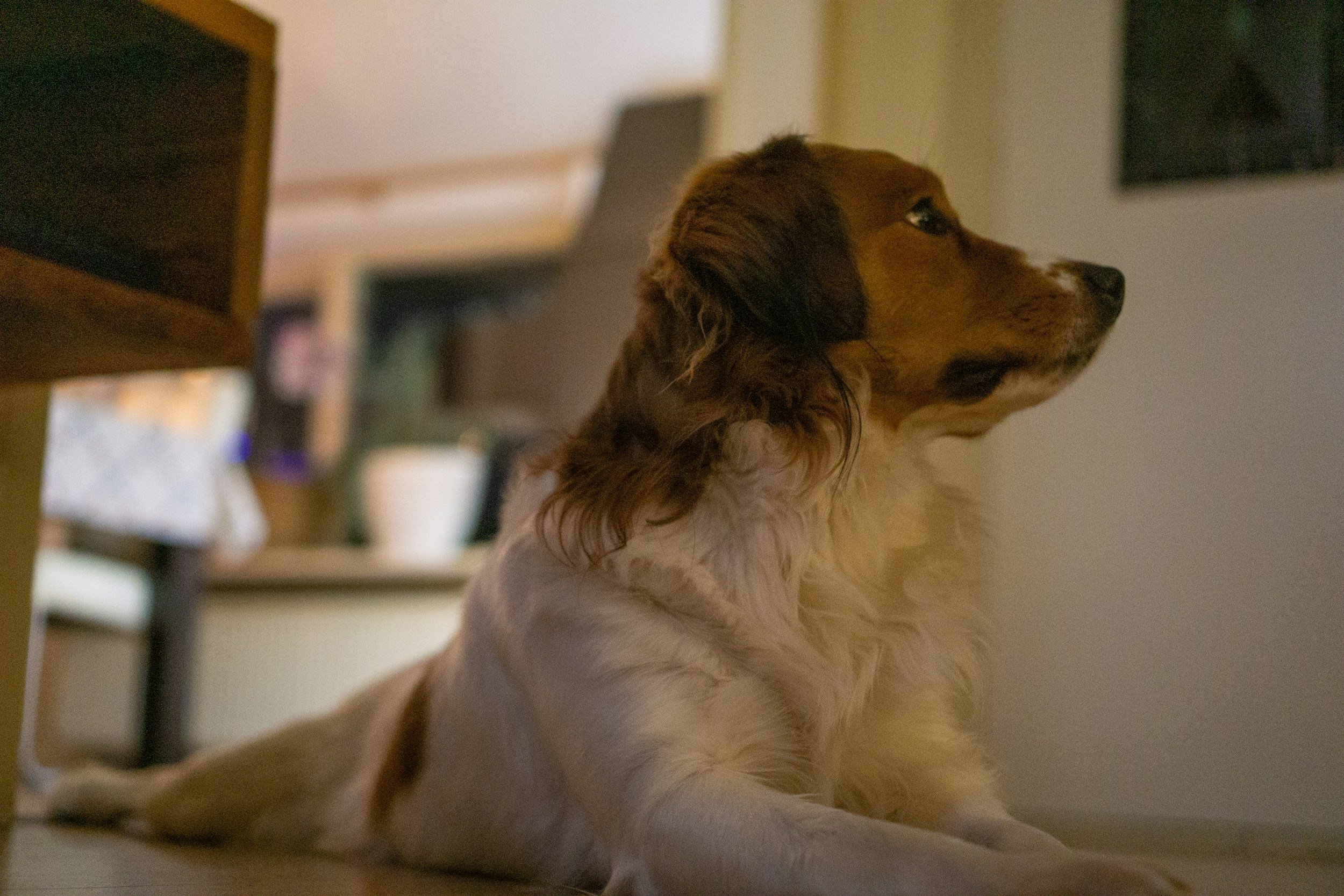
If you're reading this because fireworks are already going off and your dog is shaking, hiding, barking, pacing, or climbing into your lap, take a breath.
You don't need to have a perfect plan right now.
Your dog isn't giving you a hard time.
They're having a hard time.
And while we may not be able to make the fireworks disappear, there are things you can do to help your dog feel safer and more supported through it.
Step 1: Move to the Quietest Area of Your Home
The first goal is simple:
Reduce the intensity of the sounds as much as possible.
Move your dog to the quietest room available.
This might be:
A bedroom
A basement
A large closet
A bathroom
An interior room with few windows
Don't worry about whether it's the "right" room.
Just choose the place that feels safest and quietest.
Many dogs naturally seek out small enclosed spaces when they're worried, and that's completely normal.
Step 2: Add Background Noise
Background sound can help soften the impact of fireworks.
Try:
White noise
A fan
A television
Calming music
One of my favorite options is the "Through A Dog's Ear" music series, which was specifically created to help dogs relax.
The goal isn't to completely block out the fireworks.
It's simply to make them less intense and less startling.
Step 3: Offer Food
Food can be incredibly helpful for many dogs.
Start with whatever treats you have available.
Toss a few on the floor in front of your dog and see if they're interested.
If not, try something more exciting:
Hot dogs
Cheese
Deli meat
Shredded chicken
Anything your dog absolutely loves
If your dog is willing to eat, that's great.
If they aren't interested, that's okay too.
Many dogs lose interest in food when they're very stressed.
Don't force it.
Just keep offering opportunities.
Step 4: If Your Dog Will Take Food, Try This
If your dog is still interested in treats, you can start pairing the sound of fireworks with something wonderful.
When you hear a boom:
👉 Treats appear.
When you hear another boom:
👉 More treats appear.
The timing doesn't need to be perfect.
Just aim to make good things happen just after the sounds occur.
Over time, this can help shift your dog's emotional response from:
"That sound is scary."
to
"That sound predicts good things."
Step 5: Comfort Your Dog If They Want Comfort
This is one of the biggest myths in dog training:
You cannot reinforce fear by comforting your dog.
If your dog wants to sit next to you, lean against you, or climb into your lap, it's okay to provide comfort.
You can:
Sit quietly with them
Speak softly
Pet them if they find it comforting
Simply be present
Many dogs find safety in being near someone they trust.
Step 6: Support the Dog in Front of You
Not every dog responds the same way to fireworks.
If your dog is hiding or shaking
Allow them to stay in their safe space.
Avoid pulling them out or encouraging them to "face their fears."
Offer comfort, food, and quiet support.
If your dog is pacing
Try:
A lick mat
A stuffed Kong
Scatter feeding
Slow treat searches
These activities can help redirect some of that nervous energy.
If your dog is barking at the sounds
Move farther from windows if possible.
Close curtains or blinds.
Provide background noise.
Offer food, enrichment, or calming activities if they're able to engage.
Remember that barking is often your dog's way of responding to something they find alarming.
The goal isn't to stop the barking.
The goal is to help them feel safer.
Step 7: Know When to Call Your Veterinarian
If your dog experiences any of the following:
Extreme panic
Attempts to escape
Self-injury
Hours of pacing or distress
Destructive behavior caused by fear
It's worth discussing medication options with your veterinarian before the next fireworks season.
For some dogs, behavioral support and management are enough.
For others, medication can be a valuable part of helping them feel safe.
When the Fireworks End
Once things quiet down, don't worry about trying to "train" anything.
Just let your dog recover.
Offer water.
Give them a chance to rest.
Allow them to decompress.
Many dogs are tired after spending hours in a heightened state of stress.
Make a Plan for Next Time
If your dog struggled tonight, know that you're not alone.
The good news is that there are things you can do before the next fireworks season to help your dog feel more comfortable.
That includes:
Desensitization training
Counterconditioning
Environmental management
Veterinary support when appropriate
You can read my full preparation guide here:
👉 How To Help Your Dog Prepare for Fireworks
And if you'd like personalized help creating a plan for your dog, I offer virtual behavior consultations and would be happy to help.
