
What To Do When Your Dog Reacts on a Walk
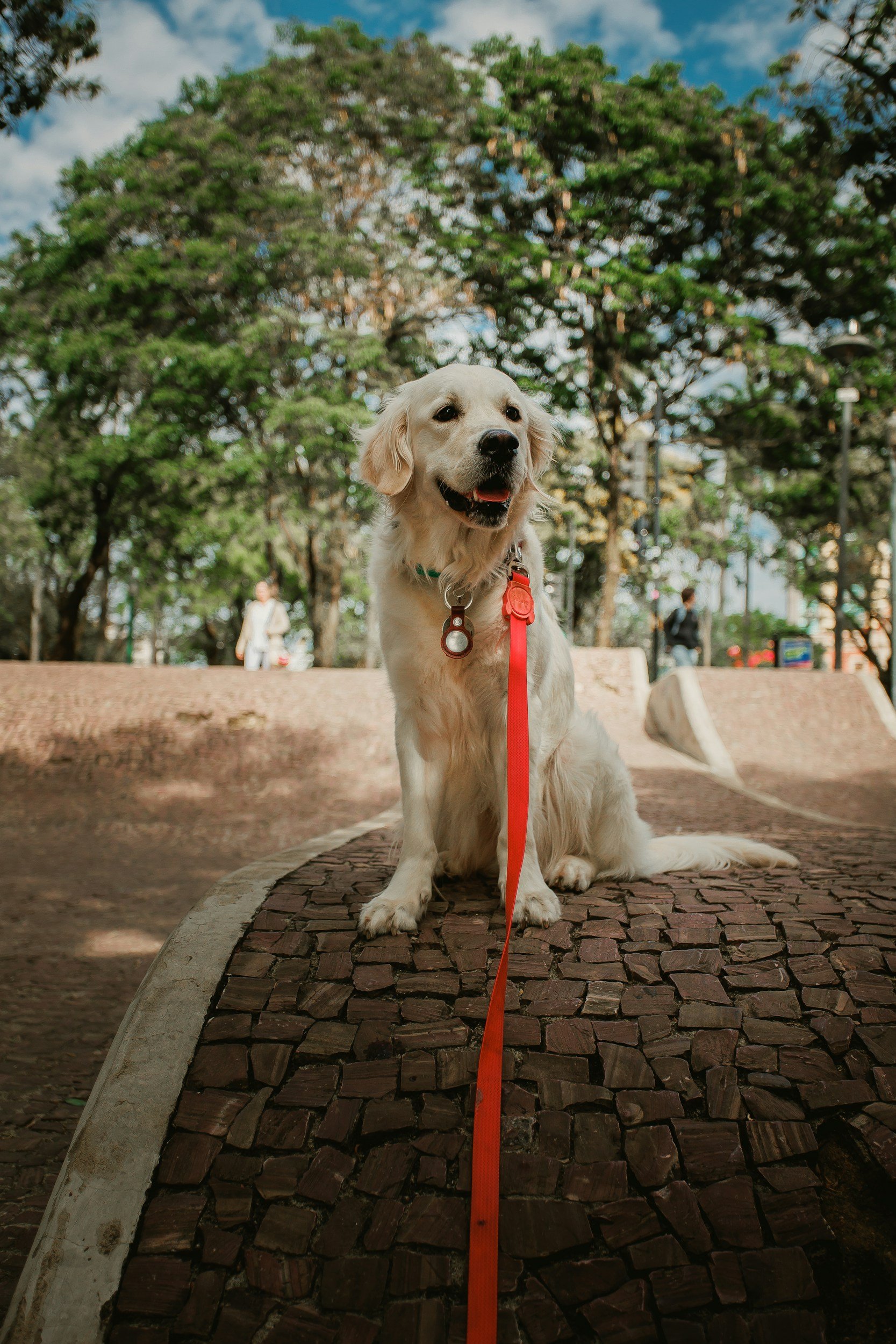
Having a reactive dog on walks—one who barks, lunges, or growls at other dogs or people—can feel scary, stressful, and even embarrassing.
One moment you’re walking down the street, and the next your heart rate spikes as you spot a potential trigger and glance at your dog to see if they’ve noticed yet. Or maybe everything feels calm… until suddenly your arm is jerked as your dog barks and lunges at someone you didn’t even see approaching.
Reactions happen fast. They can feel jarring and overwhelming, and over time they can make you dread going out with your dog.
If this is something you’ve been struggling with, you’re not alone in it.
A lot of the dogs I work with feel overwhelmed on walks, and it can be really hard to know how to respond in the moment.
If you want more gentle, practical support like this, I share simple, realistic ways to help dogs feel calmer in my newsletter—and you’ll also get my free guide: 10 Things to Do When You’re Worried About Your Dog’s Behavior.
One of the most important (and often overlooked) parts of handling reactivity on walks is understanding why it’s happening.
This isn’t your dog being disobedient, stubborn, or “bad.”
It’s your dog having an intense emotional response to something they find scary, threatening, or even overly exciting. Reactivity can come from fear, but it can also come from over-arousal.
In these moments, your dog isn’t choosing their behavior in a thoughtful way—they’re reacting from a stress response (fight or flight).
When that part of the brain is activated, learning becomes very difficult.
That means this is not the moment for obedience training—it’s the moment for support and guidance.
Your role is to help your dog move out of the situation and back toward a more regulated state.
The Plan: What To Do in the Moment
Step 1: Create Distance
Move away calmly
Cross the street or step off the path
Increase space between your dog and the trigger
Distance is one of the most powerful tools you have.
When you create distance, you lower the intensity of the situation and give your dog a chance to come down from that heightened emotional state.
This may sound obvious, but in the moment it can be surprisingly hard to remember.
It’s also important to remember:
👉 The amount of distance needed is determined by your dog.
If you’re two houses away and your dog is still staring, tense, or fixated—you’re still too close.
Step 2: Redirect Gently
Treat scatter (toss a huge handful of treats in the grass)
Magnet hand (put a handful of treats at your dog’s nose while you move away and let them eat out of it)
“Go find it” (a pre-trained cue to search for treats in the grass thrown one at a time)
Once you’ve created enough distance, these strategies help shift your dog’s focus without pressure.
Think of this less as distracting your dog, and more as helping them shift out of a stressful moment.
They give your dog something safe and positive to engage with, rather than staying locked onto the trigger.
Over time, this can also help create more positive associations with the environment.
They can also help activate calming behaviors like sniffing and foraging, which support regulation.
Step 3: Let Your Dog Decompress
Pause
Let them sniff
Take a breath (you and your dog)
After the initial moment has passed, give your dog time to come down.
Sniffing, slow movement, and pausing are all ways dogs naturally regulate their nervous systems.
This is also a great moment to check in with yourself—slow your breathing and release any tension you may be holding.
You might also notice your dog do a full-body “shake-off,” similar to how they shake when they’re wet. Dogs often do this after a moment of stress or excitement, and it can be a sign they’re starting to release tension and come back to a calmer state. Not every dog will do this, and that’s okay—there are many different ways dogs show they’re starting to relax.
Step 4: Adjust the Plan (If Needed)
Shorten the walk
Change your route
Move to a quieter environment
It’s okay to change the plan.
Sometimes the best thing you can do is make the rest of the walk easier for both of you.
Choosing a quieter route or ending early isn’t a failure—it’s thoughtful handling.
What Not To Do
There are also a few things that can unintentionally make reactivity more difficult over time:
Avoid punishment or corrections
These can increase stress and create stronger negative associations with triggers.Avoid forcing your dog closer
While it may seem like they “need to get used to it,” forced exposure can lead to shutdown or escalation.Avoid asking for sustained focus (like a sit + watch) when your dog is overwhelmed
During or close to a reaction, most dogs need space, not pressure.
Also, many dogs feel safer being able to see what they’re worried about.
If you’ve ever seen something that scared you and then lost sight of it (like a spider in your house), you know how unsettling that can feel.
Small Wins Matter
Working with a reactive dog is a gradual, non-linear process.
Progress might look like:
One calmer moment
Recovering more quickly
Needing a little less distance than before
These things matter.
Try to notice and give weight to the small, positive moments not just the hard ones.
If you’re looking for more simple ways to support your dog …
Handling reactions in the moment is just one piece.
Supporting your dog’s overall needs can make a big difference in how often these moments happen in the first place.
I’ve put together a new guide with simple enrichment ideas designed to reduce behaviors like barking, chewing, and reactivity.
If you’d like more ideas like this, you can explore it here → How To Reduce Behavior Issues With Enrichment Guide
If you’re working through this with your dog right now, I know how overwhelming it can feel.
If you want help figuring out what to do in your specific situation, I offer virtual sessions where we build a plan together. There’s no pressure—just support if you need it.
