
Why Do Dogs React on Walks?
(And What It Really Means)
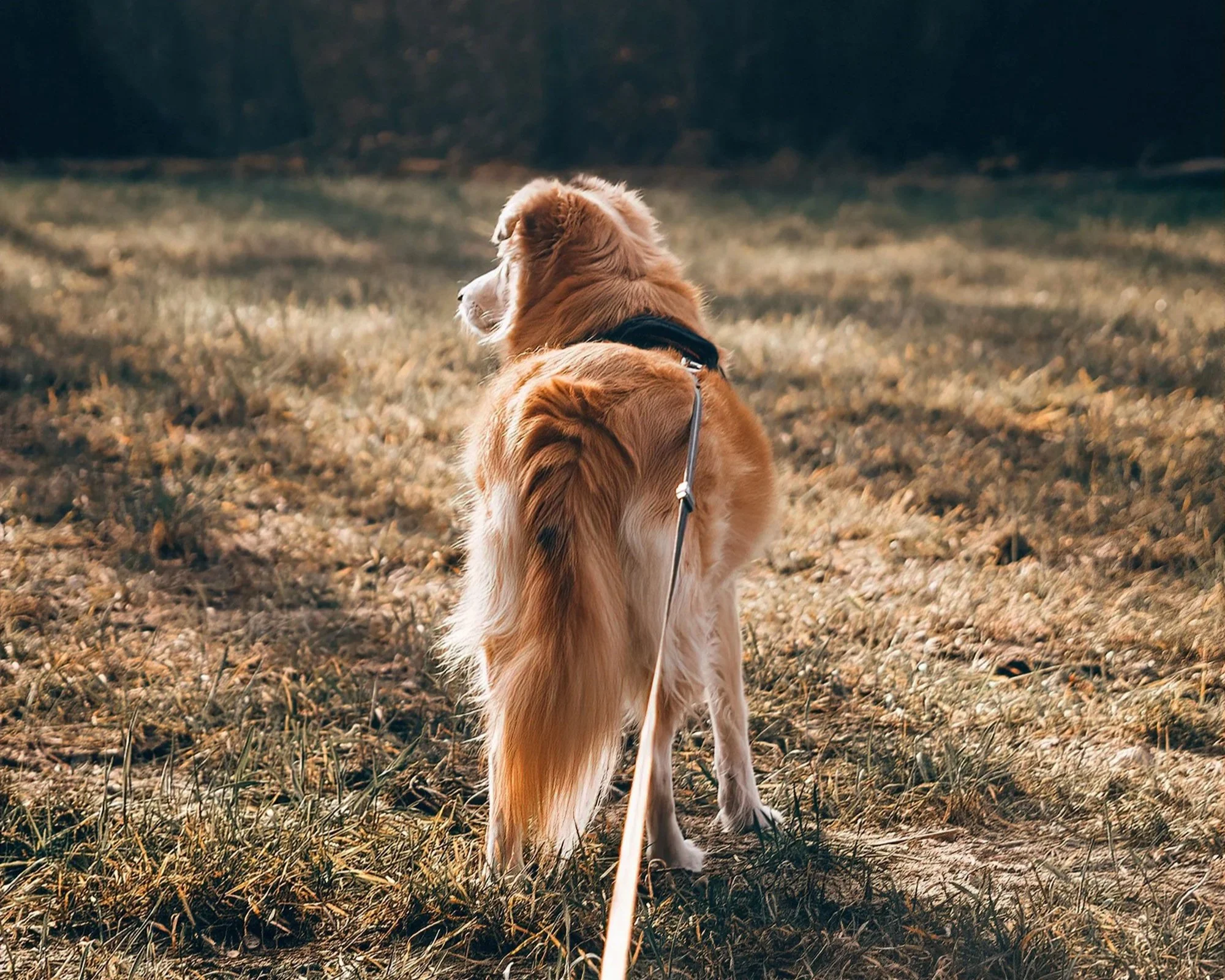
Walking your dog should feel simple.
But if your dog barks, lunges, or reacts to people, dogs, or even sounds, it can quickly become stressful and unpredictable.
You may find yourself wondering:
Why is my dog doing this?
Did I do something wrong?
Will this ever get better?
If that’s where you are, you’re not alone.
And more importantly, your dog isn’t broken, and neither are you.
Reactivity Isn’t About “Bad Behavior”
One of the biggest misconceptions about reactivity is that it’s a training issue or a sign that a dog is being disobedient.
In reality, reactivity is usually an emotional response, not a choice.
When a dog reacts on a walk, it’s often because something in their environment feels:
overwhelming
unpredictable
too close for comfort
or too exciting to regulate
Instead of responding calmly, their nervous system shifts into a stress response — often referred to as fight or flight.
That’s when we see behaviors like barking, lunging, or growling.
Common Reasons Dogs React on Walks
Every dog is different, but there are a few common underlying causes.
1. Fear or Uncertainty
Many reactive dogs are trying to create space.
If something feels scary or unfamiliar, barking and lunging can be a way of saying:
“Please go away”
This is especially common with:
unfamiliar dogs
strangers
fast or unpredictable movement
2. Frustration or Over-Arousal
Not all reactivity comes from fear.
Some dogs are reacting because they are overly excited and don’t know how to regulate that energy.
They may want to:
greet
play
investigate
But the leash prevents access, which creates frustration — and that frustration can come out explosively.
3. Lack of Emotional Regulation
Walks are full of stimulation:
sounds
movement
smells
unexpected encounters
For some dogs, especially sensitive or high-energy dogs, this can quickly become overwhelming.
Without support, their system goes into overdrive.
4. Past Experiences
Dogs learn from experience.
If something negative or overwhelming has happened in the past — even once — it can shape how your dog responds in the future.
This doesn’t always mean a major event. Even subtle or repeated stress can build over time.
5. Going “Over Threshold”
This is a concept that can be really helpful to understand.
A dog is “over threshold” when they are so overwhelmed that they can no longer respond calmly or learn.
Once a dog crosses that line:
thinking brain → off
reactive brain → on
That’s why reactions can feel sudden and intense.
Why It Can Feel Like It Comes Out of Nowhere
Many reactions don’t actually come out of nowhere.
There are often early signs that are easy to miss:
staring or fixation
body stiffening
slowing down or freezing
scanning the environment
By the time the barking or lunging happens, your dog has often already been feeling stressed for a few moments.
What This Means for You
Understanding why your dog reacts changes everything.
It shifts the goal from:
❌ “How do I stop this behavior?”
to:
✅ “How do I support my dog in this moment?”
When we focus on reducing stress, creating space, and helping our dogs feel safer, behavior change follows.
A Gentle Reminder
If your dog struggles on walks, it doesn’t mean you’ve done anything wrong.
And it doesn’t mean your dog is “bad.”
It means your dog needs support, understanding, and a plan that works for them.
Sometimes a reaction is unavoidable. Handling reactions in the moment is one piece of the puzzle.
👉 You can read more about that here: What To Do When Your Dog Reacts on a Walk
If you want a place to start…
Meeting your dog’s needs outside of the walk can make a big difference in how they feel during the walk.
I’ve put together a guide with simple enrichment ideas that support calmer behavior and help reduce things like barking, chewing, and reactivity.
You can explore it here
If you’re feeling stuck, I’m here to help.
I offer virtual sessions where we build a plan tailored to your dog, your environment, and what you’re dealing with day to day.
